ARIDEA
[0VERVIEW]
During the first year of my MSc in Product-Service System Design at Politecnico di Milano, my team and I set out to confront one of Italy's most underestimated environmental challenges: water scarcity, and a Sicily that is slowly drying out.
Our answer is Aridea: a food-service brand that makes arid-adapted food desirable, building a culture around low-water agriculture in Sicily.
TIMELINE & GOALS
4 months. Building a culture of low-water food in Sicily.
MY ROLE
I set the creative direction (choosing aridoculture as our angle), led the visual identity work, translated the full identity into the project booklet, planned and conducted the interviews that became one of our biggest turning points.
avg. per-capita water footprints
% on the ITALY’S total water USE
[PR0BLEM]
In Sicily the problem with low-water arido-coltures isn't that it's impossible. It's that almost no one knows it exists.
[0UR S0LUTI0N]
Make aridity desirable
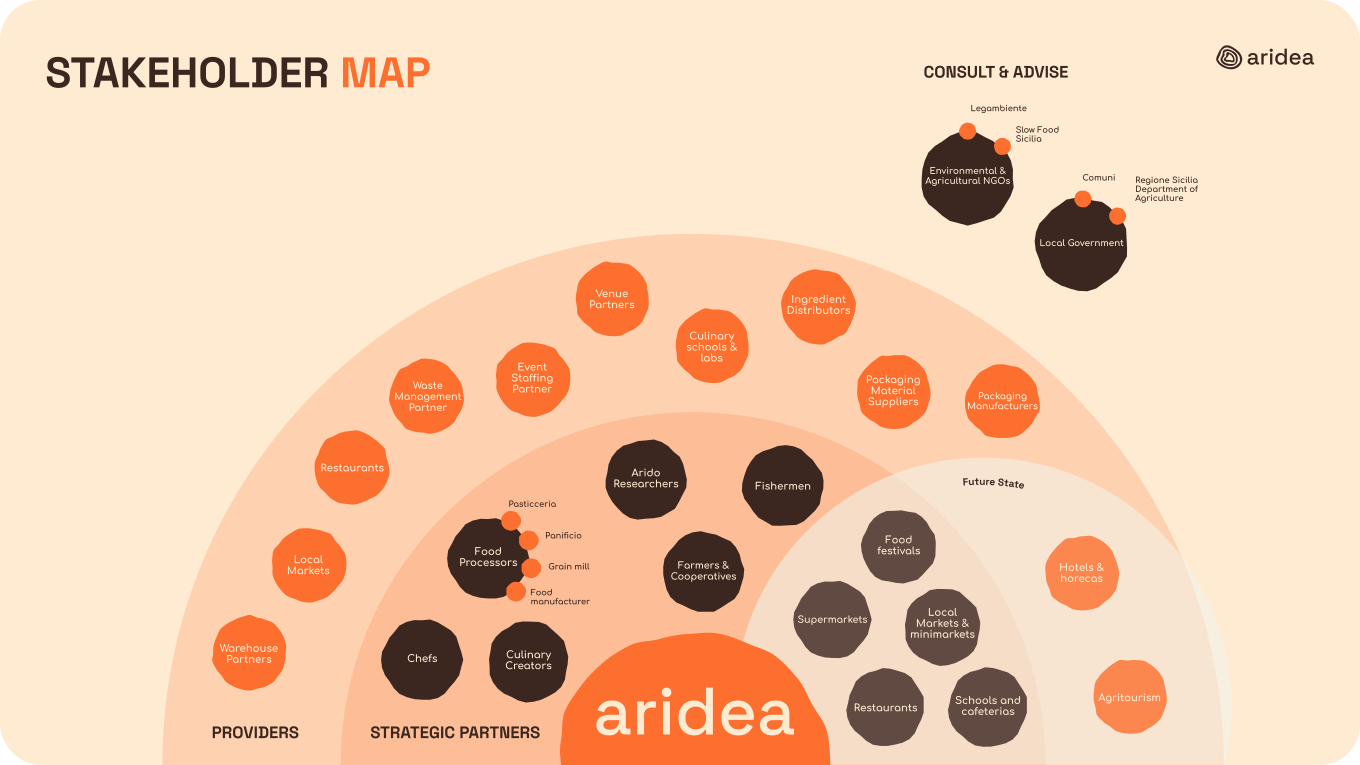
Aridea is a food-service system that introduces and supports Arido Gastronomy in Sicily — connecting producers, chefs, and citizens through curated experiences, shared knowledge, and a visible backstage network that lets arid-adapted ingredients and practices circulate.
Instead of inventing new techniques, Aridea activates what already exists but stays fragmented — and makes it visible, desirable, and within reach.

[FIRST, WHAT IS ARID0C0LTURE?]
Aridoculture is a farming knowledge rooted in centuries of drought adaptation, still surviving in fragments across Sicily. Its principle is simple: work with the soil, not against it.
We chose it because it solves
more than one problem at once
It cuts the water footprint of what we eat and helps restore soil that decades of intensive farming have left inert. And, crucially, it already exists — it doesn't need to be invented, only made visible, connected, and desirable. That gap is exactly where Aridea steps in.

[THE SERVICE]
What aridea does in practise
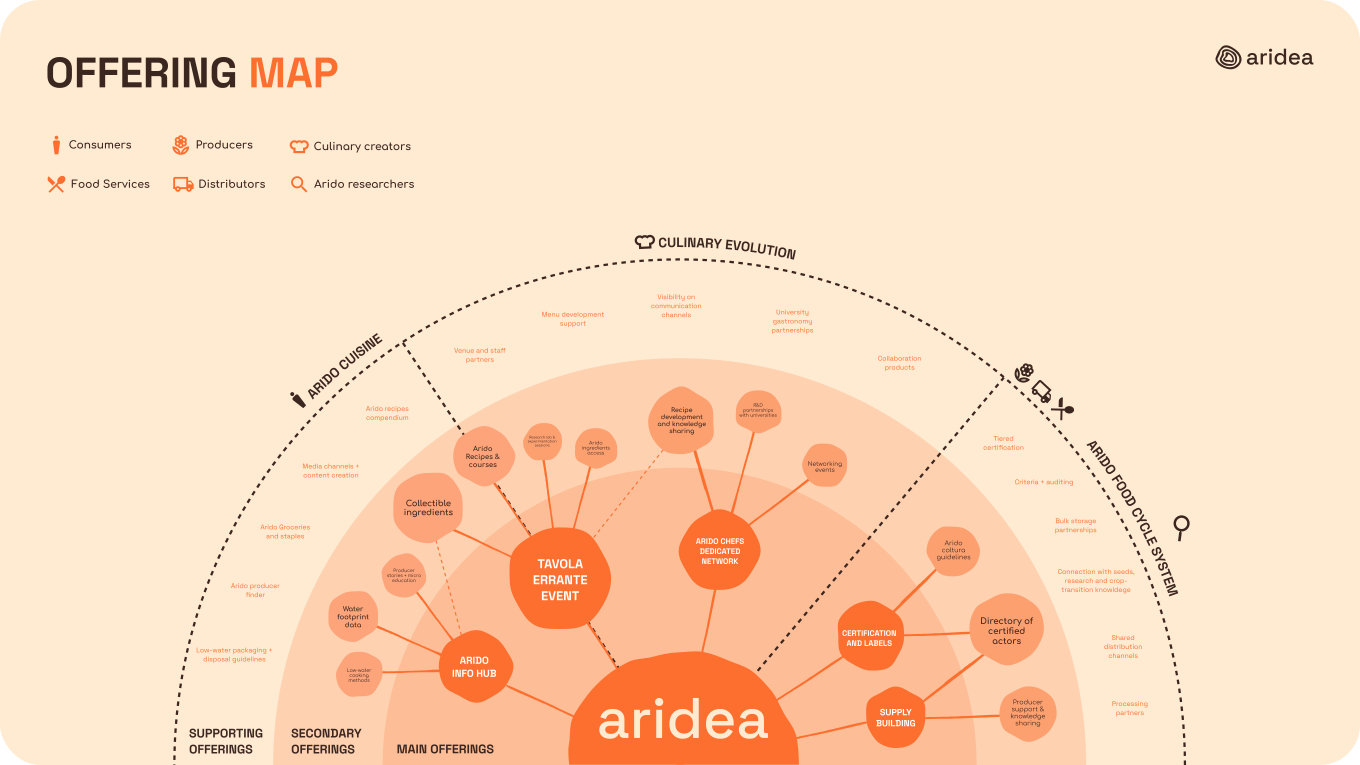
Aridea works on two layers. Frontstage: people meet Arido Gastronomy through experiences, recipes, narratives, and tools. Backstage: producers, chefs, researchers, and facilitators get connected, supported, and aligned around a shared vision, turning new demand into real production, and a lower water footprint over time.

[THE SYSTEM]
THE Multi-Layered Approach
At its core sits Tavola Errante, a roving event that brings Arido Gastronomy to life through temporary, high-impact experiences.
Around it, a connected ecosystem links consumer adoption, culinary leadership, and food-system change: an Arido Information Hub that closes the knowledge gap, a professional network for chefs, and a backstage of certification, supply, and research that makes the whole thing viable beyond one-off events.


[0UR PURP0SE]
use aridity as an opportunity to foster a relationship of mutual respect between people and the earth.


[BRAND IDENTITY]
COLOR PALETTE
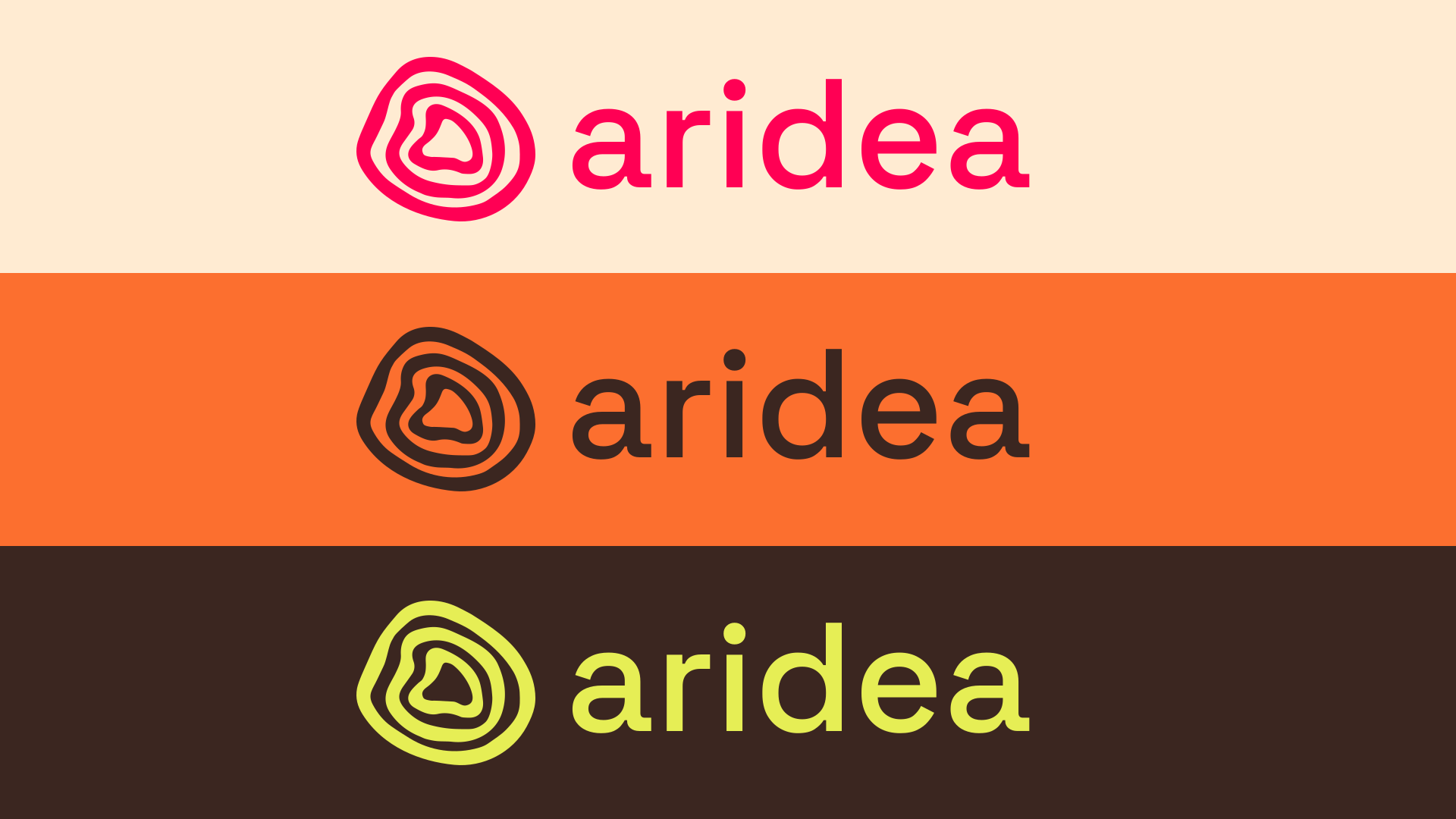
Three primary tones are inspired by organic and natural references, creating a calm and grounded visual base connected to the earth and arid landscapes. These are complemented by two highly saturated accent colors, introduced to bring energy, contrast, and visual emphasis.
CACTUS FRUIT #E72157
DRY LEMON #E1E25D
BLAZED TERRACOTTA #ED6F36
SOFT STONE #FEEBD3
ROASTED SOIL #3B2620

[l0g0]
[typeface]

Space Grotesk is used for titles, giving Aridea a voice aligned with its experimental and forward-looking approach to arid gastronomy.
Comfortaa is used for body text; echoing the project’s connection to plants, ingredients, and a more natural way of eating.
[ARIDEA'S DIGITAL EC0SYSTEM & EVENT PLATF0RM]

The platform is where Aridea lives between one Tavola Errante and the next.
Before an event, it handles discovery and tickets, and gets people ready for what they're about to taste. After it, it keeps the experience going: the Information Hub closes the knowledge gap around arido food, the recipe gallery turns curiosity into cooking, and the producers finder connects each guest to the arido growers near them.
It's the difference between a dinner people remember and a habit they build. The point where a one-night experience becomes part of how they eat.


[TAKEAWAYS]
Systems don't start from tools
Aridea was my way into Service-System Design, and it taught me that maps and blueprints aren't where systemic thinking starts. Your method is. You can't design a neat solution and then wrap a system around it to make it hold up: it has to be systemic from the very first sketch, then sharpen over time.
The best input came from outside the team
The interviews we ran weren't a box to tick, they were the single biggest resource we had. Talking to farmers, chefs and researchers who knew far more than us reshaped the project again and again. I learned to spend energy outside the small circle of my team, and to co-design with the people a project is actually for.
Learning to work with people unlike me
As my first Master's project, it was also my first time on an international team: working in English from start to finish, next to people with different backgrounds and years of experience I didn't have yet. The real lesson wasn't the language: it was learning to work with someone whose method is nothing like mine.
