ORBITE
[0VERVIEW]
During my second year of Industrial Product Design at Politecnico di Milano, my team and I designed Orbite: a set of glasses built around the quiet, unconscious relationship we have with the one in our hand.
Three tumblers: the Impatient, the Thinker and the Listener, each shaped around a different way of being at the table.
TIMELINE & GOALS
4 months. A team project for a meta-project brief, that we then took to the company itself.
MY ROLE
The concept and the glasses were shared work. My own mark was pushing Orbite past the classroom: I proposed and drove the approach to Ichendorf Milano, and did my part in the pitch and the meetings that followed.
[THE C0NCEPT]
CHARACTER GLASSES
At a table full of people, we all give ourselves away through small unconscious gestures, and the way we hold and turn a glass is one of them.
Orbite turns that quiet language into form: three tumblers built around a way of being: the Impatient, the Thinker, the Listener. Each works for water, wine, or whisky.

[THE 0BJECT]
PRODUCT & CRAFT
Three borosilicate tumblers, handmade and lampworked, Ichendorf's own craft, in clear paired with orange, blue, or green. The forms shift just enough to carry the three characters while staying one family.
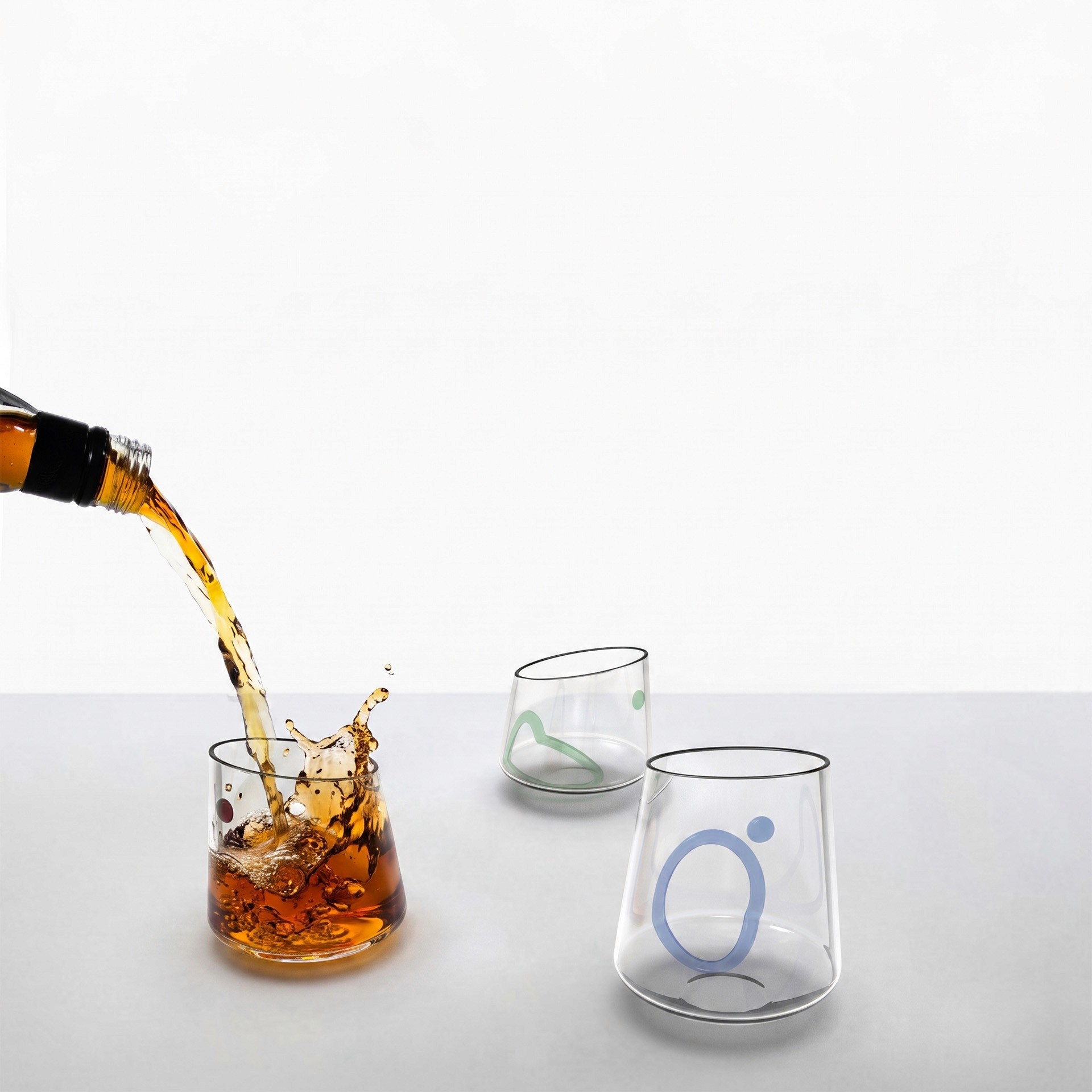
[The 0rbit remembers the m0vement]

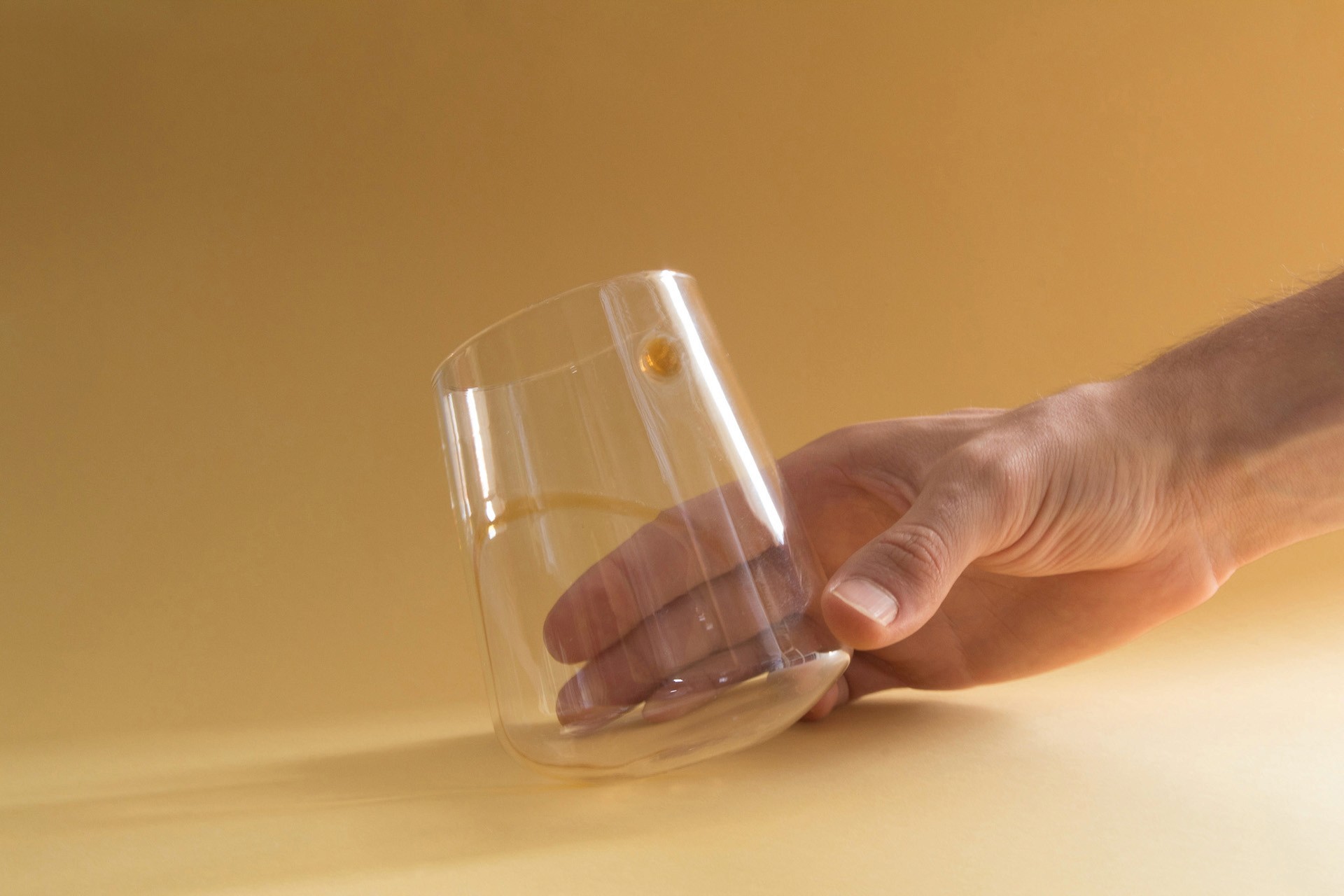
Each glass carries a dot and an orbit. The dot is the ball of a pen, the orbit its ink. As you rotate the glass in that slow, introspective way people do at a table, the dot lines up with the orbit on the far side and "draws" its trace.
The line is calculated from the tilt of the rim and the drinker's own angle of view — wider for a restless hand, tighter for a calm one. Built to be found, not explained: a small reward for whoever looks twice, and a way of making the thought behind a gesture visible.
[A real Ichend0rf c0llecti0n]
COLLECTION & LAUNCH
We took Orbite past the object and gave it the identity of an actual Ichendorf collection: naming, catalogue, product codes, and a launch invitation. As a team we kept the visual language coherent with Ichendorf's own, while letting a bit of our voice come through.


[We didn't st0p at a m0ckup]
THE SELF-INITIATED COLLABORATION
Orbite didn't stay a university project. I pushed our team to take it to Ichendorf Milano at Salone del Mobile. We pitched, met at their HQ, and they built a full-scale prototype in their own factories. Then reality set in: production costs kept it from the market. It was my first real lesson in the distance between a concept that works and a product you can actually sell.

[PR0DUCED PR0T0TYPE]


[TAKEAWAYS]
Taking a project out of the classroom
With Orbite I tried something most university projects never do: pitch to a real company with the real goal of selling it. We went in and negotiated production with the owner himself. Discussing about budgets, catalogue, the works all the way to prototype and manufacturing tests, and the meetings that come with deciding whether a product makes the catalogue.
Learning how to approach
a client
The biggest lesson wasn't about glass. It was learning how to approach a possible client: reading where to meet them, how to talk to them, and the right form to bring an idea in. Knowing how to design something is only half of it — getting someone to believe in it is the other half.
